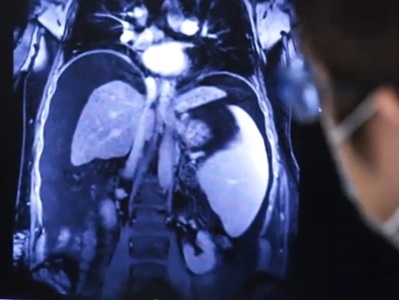
Credit: Mayo Clinic
While testing how specific compounds worsen polycystic kidney disease (PKD), researchers at the Mayo Clinic accidentally found a drug—from the 1940s—that does the exact opposite.
Polycystic kidney disease is a common inherited condition that causes fluid-filled cysts to grow in the kidneys over time, gradually reducing kidney function and often leading to kidney failure. It affects millions of people worldwide, including an estimated 140,000 people in the U.S. Many patients eventually require dialysis or a kidney transplant.
In a study published in the Journal of Clinical Investigation, researchers discovered that probenecid—a drug first used in the 1940s to conserve limited supplies of penicillin by reducing its urinary excretion—slows cyst growth.
Further investigation revealed that probenecid affects how kidney cells handle urate, a molecule commonly associated with gout. Inside the cell, urate acts as a signal, triggering a chain of events that helps move water channels to the cell surface. This allows the kidney to reabsorb water and concentrate urine without relying on vasopressin, the hormone traditionally thought to control this process.
“This represents a distinct pathway from what is described in traditional physiology models,” said Chebib. “It demonstrates that the kidney has an additional mechanism to preserve water.”
For patients with PKD, the discovery could address one of the biggest challenges of current treatment. The only approved therapy, tolvaptan, works by blocking vasopressin, which slows cyst growth but causes patients to produce very large amounts of urine—often 6 to 7 liters a day. That side effect can be difficult to live with and leads some patients to stop treatment.
In preclinical studies and a small clinical trial, after taking probenecid, patients' urine volume dropped by about 30% on average, and they went from waking up several times a night to urinate to about once per night. Many also reported improved quality of life.
Despite these promising results, researchers are not planning to rely on probenecid as a long-term solution. The drug is decades old, affects multiple systems in the body and is not widely available today. Instead, the team is using what they learned to design more targeted therapies.
Data from Mayo Clinic