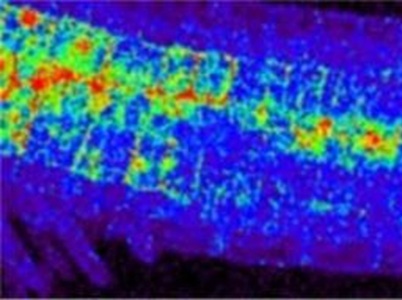
Arabidopsis Root with the color spectrum showing different glucose concentrations. Credit: Rotem Matosevich
A new study reveals how plants heal themselves. Whether damaged by a storm, an animal, or a gardener's pruning shears, researchers have discovered that plants respond to injury by actively redirecting sugars to damaged tissues, helping fuel the regeneration process.
For their study, published in PNAS, researchers focused on root regeneration in Arabidopsis thaliana, a small flowering plant widely used in biological research.
Using a fluorescent sensor to track sugar movement, the team discovered that wounds trigger a localized shift in energy transport, concentrating glucose around the injury site. Successful regeneration depends on sugars produced by photosynthesis—and limited sugar supplies can slow the repair process.
One surprising finding was that different sugars behaved differently after injury. While regeneration depended on sucrose arriving from photosynthetic tissues elsewhere in the plant, glucose—not sucrose—built up near the wound itself.
The researchers observed similar genetic responses in another type of regeneration process, suggesting that the mechanism may operate across multiple forms of plant wound repair.
The findings could eventually help scientists better understand how crops recover from physical damage caused by wind, hail, pests, agricultural machinery, or routine pruning. They may also shed light on how plants cope with environmental stresses such as drought, heat, and poor soil conditions, when energy resources become limited.
Beyond the biological discovery, the study introduces a powerful new tool for visualizing how sugars move through living plants. Researchers say it could help future studies explore how plants distribute energy during growth, stress, and recovery.
The work offers a new perspective on one of plant biology's central questions: how plants decide where to send their limited energy resources. The answer, it appears, may include a sophisticated system that rapidly channels fuel where it is needed most.
Data from Hebrew University of Jerusalem