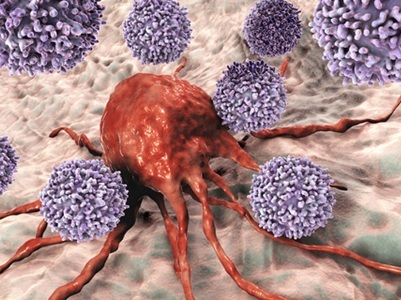
Researchers have identified cancer-specific neoantigens and neoantigen-reactive T cells from blood samples, suggesting that a blood-based approach could eventually help guide personalized cancer immunotherapy without requiring a tumor biopsy.
The study, published in Cancer Discovery, examined whether circulating tumor DNA (ctDNA) could be used to identify neoantigens—proteins produced by cancer cells that can trigger an immune response.
Personalized immunotherapies, including cancer vaccines and T cell-based treatments, require identification of the neoantigens present in an individual patient’s tumor. Researchers currently rely largely on tumor tissue obtained through biopsy or surgery, procedures that may not be possible for patients with inaccessible tumors or those who are not healthy enough to undergo invasive procedures.
Gros and colleagues sequenced ctDNA from blood samples collected from six patients with metastatic melanoma, breast, head and neck or colorectal cancer. The researchers were able to identify between 63.25% and 97.4% of the neoantigens detected through conventional tumor tissue analysis in the same patients.
The blood-based analysis also identified neoantigens that were not detected in the resected tumor tissue. According to the researchers, this could be particularly relevant in metastatic disease, where tumors may be present in multiple organs and a biopsy from a single lesion may not reflect the full range of neoantigens across the cancer. T cells isolated from blood samples of six of eight patients also recognized and responded to neoantigens identified through ctDNA and/or tumor tissue analysis.
The researchers then evaluated ctDNA in a separate group of 69 patients with metastatic solid tumors. ctDNA was detectable in 32 patients, or 46.4%. Among 17 patients with colorectal cancer, ctDNA was detected in 14, or 82.4%.
The findings suggest that blood-based neoantigen identification could complement, and in some cases potentially replace, tissue-based analysis. The approach could also provide a way to monitor changes in neoantigens and immune responses during treatment, potentially offering information about treatment response, tumor evolution, and resistance.
Data from AACR