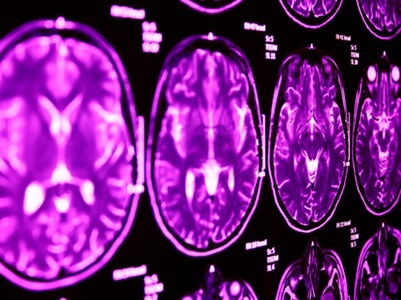
Three distinct brain biotypes exist in children who have attention-deficit/hyperactivity disorder, anxiety disorder or both, a new Stanford Medicine-led study has shown.
In their study, published in Nature Mental Health, the researchers analyzed data from the Adolescent Brain Cognitive Development study, a long-term look at brain development that includes more than 11,000 U.S. children who were enrolled in the project when they were 9 or 10 years old.
From the ABCD data, the researchers studied 3,508 kids who, when they joined the study, had a diagnosis of ADHD, anxiety or a combination of the two conditions; 693 kids who were undiagnosed when they enrolled in the study but were later diagnosed with one or both conditions; and 1,947 controls, children who never received either diagnosis. All children had fMRI brain scans, and completed several cognitive and behavioral tests. The researchers used brain scans from an additional 224 children from a second study, the Healthy Brain Network, to validate the results. All the children in the validation group had a diagnosis of ADHD or anxiety disorder.
The researchers then built an AI-powered model to analyze functional connectivity on the children’s brain scans. The model incorporated information about children’s diagnoses and behavioral assessments to figure out which functional connectivity patterns were more prominent in the brains of kids with ADHD and/or anxiety than in children who never received these diagnoses.
The model identified two brain-behavior dimensions contributing to ADHD and anxiety: cognitive-behavioral dysfunction and emotion-attention dysfunction. These two facets of brain dysfunction are each driven by different brain networks. They combine in different ways to form the three brain biotypes uncovered by the model, which are the externalizing-disinhibited biotype, the internalizing-distressed biotype and the mixed biotype.
Kids with the externalizing-disinhibited biotype showed more hostility, defiance and impulsivity, as well as more aggression and rule-breaking, and were more likely to have an ADHD diagnosis. Those with the internalizing-distressed biotype had more guilt, tension and perfectionism, as well as more anxious-depressed symptoms, and more often had anxiety diagnoses. Children with the mixed biotype had more attention problems, irritability and self-injury, and were more likely to have ADHD diagnoses.
Interestingly, the biotypes could be detected in the baseline brain scans of children who had no diagnoses when they enrolled in the study but who were later diagnosed with ADHD, anxiety or a mix of both.
“We think this means we may be able to use the biotypes as an early indicator of these conditions,” said co-senior study author Yu Zhang, assistant professor of psychiatry and behavioral sciences. “It could help us provide more timely intervention for these conditions and slow down or, we hope, even reverse their progression.”
Zhang envisions using information from the new study in future clinical trials to see which treatments improve which specific patterns of brain activity, and to match treatments to each of the three brain biotypes.
“We want to find biomarkers that can really inform the right treatment at the right time,” he said.
Data from Stanford Medicine