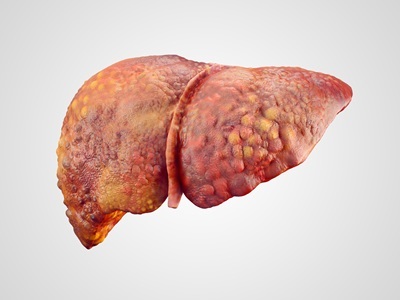
A first-of-its-kind study links two little-studied “forever chemicals” to liver cancer, with the greatest risk in those already genetically susceptible to fatty liver disease.
Hepatocellular carcinoma (HCC), the most common form of liver cancer, carries a five-year survival rate of less than 20%. Today, the fastest-growing driver of HCC is MASLD.
In the new study, published in Environmental Health Perspectives, researchers analyzed pre-diagnostic blood samples drawn an average of 7.8 years before diagnosis from 223 people in the Multiethnic Cohort Study (MEC) who later developed HCC, and 223 matched controls.
Of the 12 PFAS compounds measured, two emerged as significantly associated with liver cancer risk: PFHpA and PFNA. PFHpA was developed as an alternative to older legacy PFAS, such as perfluorooctanoic acid (PFOA) and perfluorooctanesulfonic acid (PFOS), that were phased out amid concerns about their persistence in the human body.
The study showed that people in the highest quartile of PFHpA or PFNA exposure had two to 2.5x the odds of developing liver cancer compared to those with the lowest levels of exposure.
"The concerning thing about our results is that the strongest associations were not in the most studied legacy PFAS," Goodrich said. "They are among the newer PFAS, and we don't have much information about their effect on human health.”
The USC study is also the first to investigate how genetics and PFAS together may affect liver cancer risk. Using a polygenic risk score for fatty liver disease, researchers found that the link between PFHpA and liver cancer was much stronger in people with high genetic susceptibility to fatty liver disease. Among those with low genetic susceptibility, there was no significant association. When both factors are present, their effects appear to compound, leading to higher risk of liver cancer.
Earlier detection of liver cancer is strongly linked to better survival. Identifying people who carry both elevated PFAS exposure and high genetic susceptibility could eventually guide who receives earlier liver cancer screening.
The team plans to expand their analysis to a wider range of environmental exposures, building toward a more complete picture of how lifetime chemical exposure drives cancer risk.
Data from Keck School of Medicine of USC