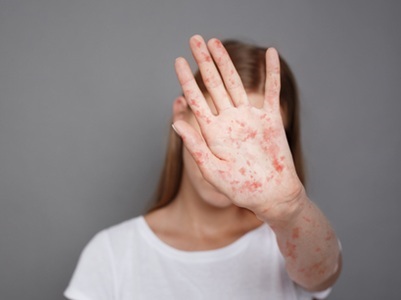
As the United States loses its status as a country that has eliminated measles, a new nationally representative Annenberg Public Policy Center (APPC) survey finds many Americans still lack basic knowledge about the disease and the vaccine that prevents it.
Since 2000, the United States held measles elimination status. On Nov. 17, 2026, the Pan American Health Organization announced that the United States no longer met the criteria for measles elimination status.
Against that backdrop, a November 2026 Annenberg Science and Public Health (ASAPH) survey of adults drawn from the SSRS Omnibus survey finds that nearly 2 in 3 Americans (64%) agree that it is false to say that “vaccines given to children for diseases like measles, mumps, and rubella cause autism.” But 1 in 6 people (17%) regard that statement as true and 19% report that they are not sure whether it is true or false.
The current 2026 survey also shows that about half of respondents (49%) think that children who are fully vaccinated are “about as likely” to show signs of autism as children who are not fully vaccinated, while 11% think fully vaccinated children are “more likely,” 14% believe they are “less likely,” and 26% are not sure of the likelihood.
Many Americans do not realize how deadly measles can be to children. Most respondents in the current survey are uncertain how many children who get measles are likely to die as a result of the disease, with 59% saying they are not sure. Only 9% correctly choose “about 1 in 1,000,” the response that is closest to the CDC’s estimate that 1 to 3 of every 1,000 children infected with measles will die from respiratory and neurologic complications. Nearly a quarter of those surveyed (23%) choose lower rates, and 9% choose higher rates.
Americans also show uncertainty about the number of doses of the measles vaccine children need. In the November survey half (49%) say they are not sure. A third (34%) know that children need two doses of the MMR vaccine for full protection.
Data from Annenberg Public Policy Center of the University of Pennsylvania