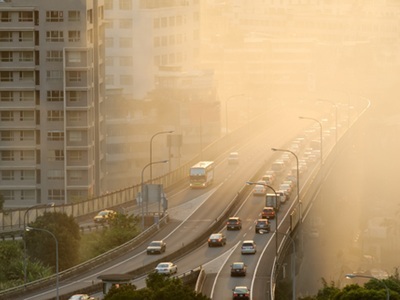
Tiny particles of air pollution—the microscopic soot and dust from traffic, industry and wildfires—may damage the brain by changing how its immune cells behave—leading to dementia.
In the study, published in the Journal of Neuroinflammation, researchers analyzed data from about 500,000 adults in the UK Biobank, a research dataset that has tracked their health for up to 14 years.
People living in the most polluted third of areas were 25% more likely to develop Alzheimer's disease or a related form of dementia than those in the least polluted third. This held true after accounting for age, smoking, diabetes and other factors. Pollution raised risk regardless of the magnitude of people’s inherited genetic risk for Alzheimer’s.
To investigate whether pollution was a cause rather than simply associated, the research team exposed mouse models to outdoor Cleveland air for 5 months. The particulate matter 2.5 (PM2.5) in that air were concentrated to levels similar to those found in the world's most polluted cities.
According to study results, otherwise healthy mice developed memory problems, a leaky blood-brain barrier and brain inflammation. Their brains also had a lower ratio of NAD+/NADH, a chemical balance that reflects the brain’s energy status and ability to withstand injury and disease. They showed increased death of newborn neurons in the hippocampus, the brain's center for learning and memory.
The pollution also changed which genes were switched on in microglia, the brain’s immune cells, in ways that disrupt their normal work, the study found.
The researchers were struck by how these Alzheimer's-like changes appeared in mice without any of the amyloid plaques that define the disease. Further, in mice genetically prone to Alzheimer's, air pollution caused the same harm and also sped up amyloid plaque buildup.
Data from Case Western Reserve University