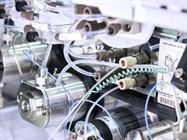
When delivering smaller particles through the liquid mobile phase of a HPLC unit, the liquid must be forced through the column under pressure. The purpose of an HPLC pump, also called a solvent delivery system, is to force the liquid through the system while maintaining a specific flow rate. HPLC pumps can be broadly categorized into three types: syringe pumps that provide pulseless delivery, reciprocating or piston pumps that push the mobile phase through with a series of pistons, and pneumatic pumps that use gas to pressurize the mobile phase. Reciprocating pumps are most common due to their good pressure generation, constant flow rate, and small footprint, but each type of pump has its pros and cons that should be weighed when purchasing. Other things to look out for when selecting a pump include the instrument’s compatibility with different solvents, low dead volume to minimize issues with solvent changeover, delivery method (either isocratic or gradient), as well as things like price, ease of use, and lifetime.
Get Quote for All
Select up to 5 products from below to compare or request more information.
Waters Corporation
- HPLC/UHPLC System
- Up to 5.0 mL/min
- Inquire
Waters Corporation
- UHPLC System
- Up to 2.2 mL/min
- Inquire
Waters Corporation
- UPLC System
- Up to 2.0 mL/min
- Inquire
Waters Corporation
- Nano/Microflow UPLC System
- 200 nL/min to 100 µL/min
- Inquire
Waters Corporation
- HPLC System (bio-inert, MaxPeak HPS Technology)
- 0.001 to 10 mL/min
- Inquire
Waters Corporation
- HPLC System
- 0.001 to 10.000 mL/min
- Inquire
Waters Corporation
- HPLC System
- Up to 5.000 mL/min
- Inquire
Waters Corporation
- HPLC System (bio-inert, MaxPeak HPS Technology)
- 0.001 to 10 mL/min
- Inquire
Select up to 5 products from above to compare or request more information.
Tags:
Please Login or Register to Create Tags