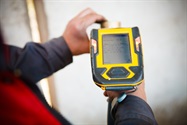
Laser Induced Breakdown Spectroscopy or (LIBS) is an analytical technique and form of Atomic Spectroscopy that employs a short laser pulse directed at the sample surface which results in the formation of high-temperature plasma. As the plasma cools, it emits light with spectral peaks unique to each element of the periodic table. These spectral peaks are collected for LIBS spectral analysis and once identified, reveal the chemical composition of the sample, regardless of its physical state. With applications in a broad range of fields including: engineering, chemistry, food analysis, biomedical science, forensics and more, coupled with little to no preparation of the sample required have allowed LIBS to become an attractive, effective, and fast whole chemical analysis technique.
Different types of lasers can employed with the most popular being the Nd:YAG which provides an easy, reliable way to produce plasma. The fundamental mode of this laser is set to 1064nm with a pulse duration between 6 and 15ns. The fundamental and first harmonic wavelengths are the most commonly used in LIBS. CO2 or excimer lasers can also be used for work in IR or UV but regardless of laser, ablation wavelength and pulse duration are usually determined by considerations of the sample material in question and sample environment.
Get Quote for All
Select up to 5 products from below to compare or request more information.
Hitachi High-Tech America, Inc.
- Energy Dispersive X-Ray Fluorescence
- Material Testing, Environmental Testing, Scrap Metal Recycling, PMI Inspection, Precious Metals, Regulatory Compliance Screening, Environmental Soil Screening, Minerals, Coating Thickness, Archaeometry, Quality Assurance, Quality Check
- Silicon-drift detector (SDD)
Select up to 5 products from above to compare or request more information.
Tags:
Please Login or Register to Create Tags