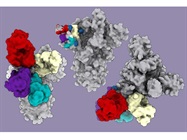
Most are familiar with the spike protein on the SARS-CoV-2 virus, however, there is now a lesser-known region recognized by antibodies to the virus. Some of the recovered patients' antibodies blocked the coronavirus by binding to a different place on the virus spike, known as the N-terminal domain. The N-terminal domain antibodies demonstrated as strong as those that bind to a receptor-binding domain.
The senior author on the paper is David Veesler, Associate Professor of Biochemistry at the University of Washington School of Medicine in Seattle, and his team used an electron cryo-microscopy (cryoEM) to map where these antibodies attached and showed all the antibodies that prevent infection bind a single place on the N-terminal domain. Their study is published in Cell, showed how these antibodies protected hamsters from SARS-CoV-2.
Additionally, the team also demonstrated that the virus is slowly defying these antibodies that people are acquiring. The virus adapts to these antibodies by accumulating mutations that help the virus escape these defenses. Variants detected in the United Kingdom and South Africa contained mutations that make the virus less vulnerable to the neutralizing power of the N-terminal domain antibodies. N-terminal domain-specific antibodies function with other antibodies to wage a multi-pronged uprising against the coronavirus. The N-terminal domain antibodies inhibit virus-cell fusion.
Veesler noted, "Several SARS-CoV-2 variants harbor mutations within their N-terminal domain supersite." He continued, "This study shows that NTD-directed antibodies play an important role in the immune response to SARS-CoV-2 and they appear to contribute a key selective pressure for viral evolution and the emergence of variants."
Image credit: Vir Biotechnology and David Veesler Lab at UW Medicine