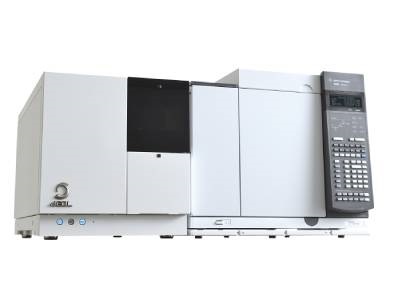
JEOL USA has announced it will introduce its new triple-quadrupole GC-MS/MS system at the upcoming MJBizCon cannabis business conference in Las Vegas, which runs from Oct. 19 to Oct. 22. The JMS-TQ4000GC Triple-Quadrupole Mass Spectrometer offers pesticide residue analysis and terpene profiling capabilities for cannabis labs, as well as other applications in the agricultural industry. The new system is designed to provide high speed, sensitivity, precision and accuracy for detection of trace-level residual pesticides, according to JEOL.
The JMS-TQ4000GC system has a selected reaction monitoring (SRM) switching speed of 1,000 channels/sec and can test for hundreds of different pesticides within a sample to ensure products are safe and high quality before reaching the customer.
“Just as pesticides are harmful to unwanted pests, they can also be harmful to pollinators, such as honeybees, and even humans in large enough doses,” said Kirk Jensen, an applications chemist at JEOL. “While not an exhaustive list, possible side effects can include nervous system damage, hormone imbalances, and skin irritation, depending on the pesticide. As such, it is important to know which pesticide residues are on the crop, how much is present, and if that amount poses a substantial risk to human and environmental health.”
Cannabis testing can be challenging due to inconsistent testing regulations between states and regions. In addition to the new product launch, JEOL is collaborating with Think20 Labs, a California-based laboratory licensed to test cannabis, hemp and cannabis-related consumer products in the state, to provide improved and more precise analytical techniques to the cannabis testing market.