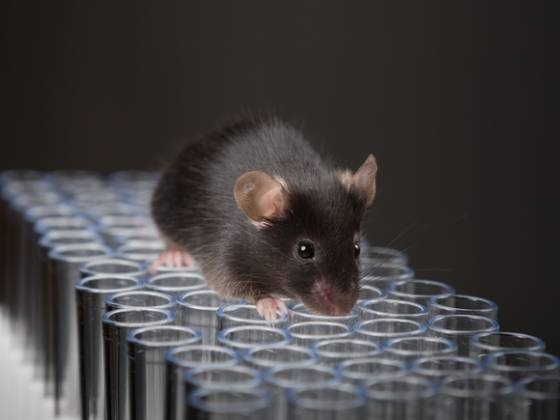
Bipolar disorder risk has been linked to mutations in fatty acid desaturase (FADS) genes, which encode enzymes that process omega-3 fatty acids. There is currently no established, clinically relevant animal model for bipolar disorder that exhibits the mood swings – episodes of depression and mania – seen in humans with the disorder. A team including researchers from Juntendo University and the RIKEN Brain Science Institute has now engineered mutant mice that could serve as a model for bipolar disorder and potentially aid in the development of new treatments.
The researchers used CRISPR-Cas9 gene editing techniques to alter the Fads1 and Fads2 genes in the mice, producing mice with reduced activity of the FADS1 and FADS2 enzymes. The team used gas chromatography-mass spectrometry (GC-MS) to analyze the fatty acid levels in the plasma of the mice, and found that the mutant mice exhibited fatty acid level changes similar to those seen in bipolar disorder patients with FADS-related genetic risk. The researchers also studied the behavior of the gene-edited mice versus wild-type mice over a six-month period by observing wheel-running activity and performing tail suspension tests.
The mice engineered by the researchers exhibited bipolar-like swings in behavior, including phases of hyperactivity lasting about 12 hours and episodes of hypoactivity lasting up to several weeks. During the hyperactivity periods, the mice spent an increased amount of time running on wheels and spent more time moving during tail suspension tests. During hypoactive periods, the mice showed low physical activity and spent abnormally short periods of time running on wheels, a behavior change associated with anhedonia – or diminished pleasure – according to co-corresponding author Tadafumi Kato of Juntendo University. The hypoactive mice also exhibited longer periods of immobility during tail suspension tests and had disrupted circadian rhythms.
The team tested whether the mutant mice would respond to treatments such as omega-3 fatty acid supplements, namely eicosapentaenoic acid (EPA) and docosahexaenoic acid (DHA), as well as administration of the mood stabilizer lithium, which is widely used to treat patients with bipolar disorder. The researchers found that the occurrence of hypoactive periods reduced significantly when the mice’s diets were supplemented with EPA and DHA, as well as when the mice were treated with lithium. Mice lacking FADS enzymes only in the brain were also engineered, but were found to not exhibit the same mood swing activity, suggesting that reduced FADS activity in the neurons was not the primary driver of the behavior changes. This finding makes it likely that FADS activity in peripheral brain tissues, which the genetic changes did not affect, is responsible for the bipolar-disorder-like symptoms in the mice, the authors concluded. This study was published in Molecular Psychiatry.
Because the mice exhibit both depression-like and mania-like episodes, and show behavioral changes in response to potential treatments, they could be used as a clinically relevant model to help develop new bipolar disorder treatments.