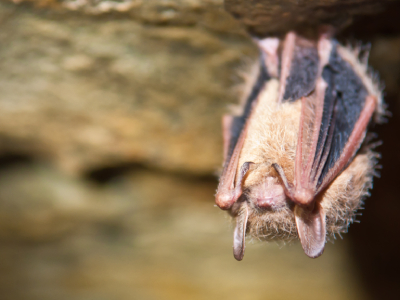
New research has discovered a connection between bat die-offs and increased pesticide use by local farmers. Additionally, with increased pesticide use, an increase in infant mortality was discovered.
Since 2006, many counties in North America have seen a collapse in bat populations due to the introduction of the invasive fungus that causes white-nose syndrome. Despite their bad reputation, bats play a critical role and are widely relied upon by farmers to protect their crops from insect damage.
"Bats have gained a bad reputation as being something to fear, especially after reports of a possible linkage with the origins [of] COVID-19," says Eyal Frank, assistant professor at the Harris School of Public Policy. "But bats do add value to society in their role as natural pesticides, and this study shows that their decline can be harmful to humans."
In the study, published in Science, Frank discovered that as bat populations declined, pesticide use increased by about 31%. Additionally, because of their common links to negative human health impacts, Frank researched the effects the increase in pesticide use had on infant mortality. He found that infant mortality increased by nearly 8% in areas with increased pesticide use, representing a 0.25% increase in mortality rate for each 1% increase in pesticide use.
"When bats are no longer there to do their job in controlling insects, the costs to society are very large—but the cost of conserving bat populations is likely smaller," says Frank. "More broadly, this study shows that wildlife adds value to society, and we need to better understand that value in order to inform policies to protect them."