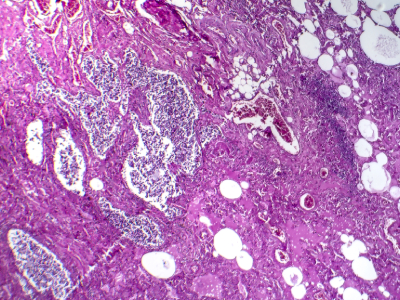
Recent research has uncovered how the body uses fibroblastic reticular cells (FRCs) to protect and activate immune cells in the fight against lung cancer. Targeting and enhancing the function of these FRCs can improve the effectiveness of existing immunotherapies.
Due to how it interacts with the immune system in unpredictable ways lung cancer remains one of the most difficult to treat. Understanding how lung cancer interacts with T cells is critical for improving therapeutic strategies.
In their study, published in Cell, the researchers used high-resolution microscopy and single-cell transcriptomics to observe lung cancer tissues to determine FRCs' role in the body's cancer response.
The researchers discovered that FRCs produce CCL19, a chemical signal used to attract and organize T cells within a tumor. Once in the tumor, T cells form an interconnected network containing dedicated microenvironmental niches where the cells gather to attack the cancer cells.
Additionally, the study revealed that the FRCs found within a tumor behave similarly to FRCs in healthy lymph nodes suggesting that tumors may retain a portion of the normal immune system structures that can create favorable conditions to combat cancer.
By targeting and enhancing FRCs, researchers believe they can boost the effectiveness of existing immunotherapies used to fight lung cancer. The researchers intend to explore methods to manipulate these cells in future studies which could lead to better personalized treatments.