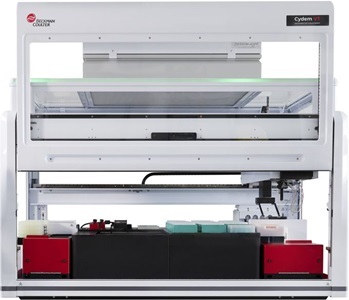
Beckman Coulter Life Sciences’ Cydem VT Automated Clone Screening System can significantly reduce time to market for biologic drug discovery and monoclonal antibody-based therapeutics by slashing manual laboratory steps in cell line development up to 90% in a single experiment, and eliminating the need for many subsequent traditional screening steps.
By delivering early answers for cell growth and productivity in the cell line development process, the Cydem VT System provides labs with more reliable clones compared with traditional methods, along with better cultivation conditions that are closer to biomanufacturing production. The all-in-one high-throughput screening platform is ideal in cell line development of Chinese Hamster Ovary (CHO) cell lines producing monoclonal antibodies (mAbs).
The system combines proprietary technologies including microbioreactor, liquid handling, antibody titer and cell health (cell count & viability) measurements into one advanced platform that empowers lab managers with a more effective, higher-throughput method for top clone screening. It allows parallel pH-controlled, fed-batch cultivation and monitoring of up to 96 bioreactors with individual gassing.
Automated operations provide at least three days of walkaway time during an experiment. Online, non-invasive pH, dissolved oxygen (DO) and biomass measurements provide continuous control over critical cultivation parameters. On-deck determination of cell concentration, viability and titer concentration ensure informed selection of the top clones.