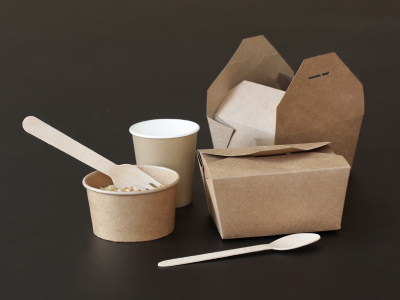
Researchers at Northwestern have developed a novel material which could become a viable alternative for plastics and toxic PFAS compounds in food packaging.
Each year the United States produces approximately 14 million metric tons of paper-based food packaging, packaging which is often coated with PFAS, plastic, or foil to achieve water and oil resistance. Despite growing concerns around the environmental impact of these products, to date the main bio-based alternatives have proved commercially unviable due to their high cost.
To remedy the impact of these coatings, the team of researchers developed a novel material, which derived from graphene oxide, which provides low-cost environmentally friendly water and oil resistance for food packaging. When used for food and beverage packaging the material provides not only exceptional barrier properties but increases over product strength as well and is readily compostable or recyclable.
To further evaluate the products performance, the researchers recently advanced testing to the Western Michigan University's Paper Pilot Plant, a facility capable of performing industry-standard evaluations of the product. During this testing, the researchers confirmed that after applying small amounts of the graphene oxide coating, paper strength and barrier performance increase 30% to 50% when compared with current coatings.
"This is not just a materials innovation; it's a market-ready solution," said Timothy Wei, who co-developed the product. "We are thrilled to be taking GO-Eco from the lab to the factory floor, with applications that could ultimately transform the entire food packaging industry."
Information provided by Northwestern University