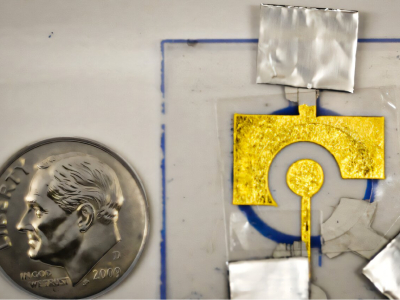
The electrochemical sensors developed in Ariel Furst’s lab consist of DNA adhered to an inexpensive gold leaf electrode, which is laminated onto a sheet of plastic. Credit: Courtesy of the researchers; edited by MIT News
MIT researchers have designed novel disposable diagnostic tools using inexpensive electrodes coated with DNA which can detect a variety of diseases including cancer or HIV.
The electrochemical sensors the team designed rely on a DNA-chopping enzyme found in the CRISPR system to shear DNA from the electrode altering the electrical signal produced. Unique to the new sensor is a polymer coating which extends the storage life of the sensor to nearly two months even at high temperatures, expanding the potential range of use of the device.
The sensors, which cost only 50 cents to make, could provide a low-cost detection method for multiple diseases in underserved regions.
"Our focus is on diagnostics that many people have limited access to, and our goal is to create a point-of-use sensor. People wouldn't even need to be in a clinic to use it. You could do it at home," said Ariel Furst, Assistant Professor of Chemical Engineering at MIT.
The sensor, which is described in a recent publication in the journal ACS Sensors, successfully detected PCA3, a prostate cancer gene found in urine, after two months of storage during the teams recent work.
Next steps for the team include expanding the device to offer cheap diagnostics for infectious disease such as HPV and HIV which can be performed in the home. The sensor has proven effective for a variety of sample types including urine, saliva, or nasal swabs, and could also be effective for detecting emerging infectious diseases.
"Our goal is to continue to test with patient samples against different diseases in real world environments," Furst concluded. "Our limitation before was that we had to make the sensors on site, but now that we can protect them, we can ship them. We don't have to use refrigeration. That allows us to access a lot more rugged or non-ideal environments for testing."