Credit: University of Cambridge
The first human clinical trial of a universal Sarbeco coronavirus vaccine has shown that the vaccine is effective, safe and has no significant side-effects.
The vaccine is unique in multiple ways. First, the active component was designed entirely by computer simulations. Second, it is designed to provide protection against a broad range of viruses—even as they mutate.
“Viruses like influenza, coronaviruses and the Ebola group are evolving continuously and by the time vaccines are rolled out, they may be poorly matched. The current ‘reactive’ vaccine system struggles to keep pace,” said Saul Faust, the trial’s chief investigator, from the University of Southampton. “This new class of universal vaccines are future-proofed. They not only protect against many variants simultaneously, but potentially against related viruses that haven’t yet emerged and spilt over to humans.”
To design the antigen, the team used all the available genetic sequence data for Sarbeco coronaviruses logged by surveillance programs around the world. Using machine learning, they then designed a “super antigen” containing the antigen features common to this whole group of viruses—including ones that haven’t emerged yet.
For the trial, the vaccine was given to 39 volunteers between 18 and 50 years old at the National Institute for Health and Care Research (NIHR) Clinical Research Facilities in Southampton and Cambridge. A previous trial in animals found that the vaccine provided a strong immune response against a range of coronaviruses.
In this human trial, the vaccine triggered immune responses in the volunteers not only to SARS-CoV-2 and SARS, but to related bat viruses that have spillover potential.
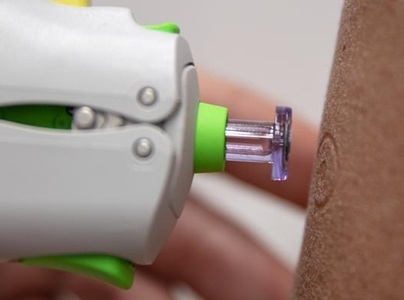
As the super antigen is compatible with most vaccine delivery systems, it was administered as a DNA vaccine through a micro fluid jet during this trial. This needle-free delivery method offers an alternative to those with a fear of needle-based injections. This could make vaccination faster and easier to carry out in large numbers of people, especially in settings where conventional injections are more challenging to deliver.
Next, a larger Phase 2 trial will assess the vaccine’s ability to induce immune responses in a wider and more diverse population, and confirm that it generates strong, broadly protective immune responses.
“If we can develop and clinically advance this new class of vaccines before a virus outbreak begins, millions of lives could be saved, lockdowns avoided and the economy preserved,” said Faust.