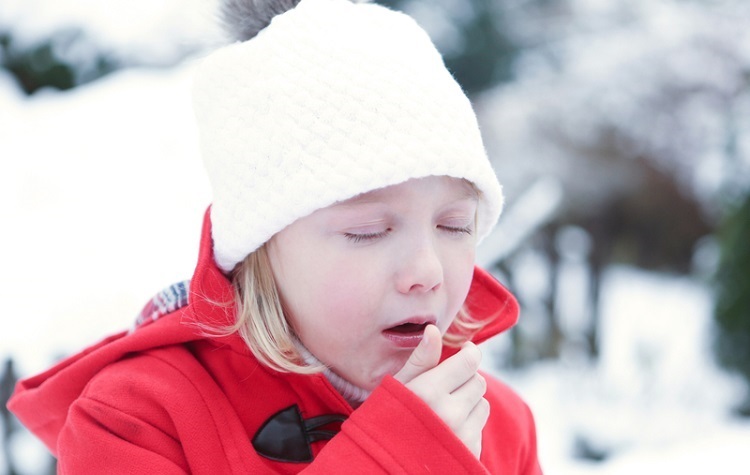
“Put a jacket on or you’ll catch a cold,” may be a mom-mantra but it’s not entirely incorrect. It’s wrong in that the jacket will not help protect you from viruses, but it’s correct in that viruses spike significantly in colder temperatures.
“Conventionally, it was thought that cold and flu season occurred in cooler months because people are stuck indoors more where airborne viruses could spread more easily,” said Benjamin Bleier, MD, director of Otolaryngology Translational Research at the Massachusetts Eye and Ear Infirmary.
However, in a new study, Bleier and his team have uncovered the truth about seasonal variation. For the first time, their study has uncovered the biological explanation behind why upper respiratory infections are more common in colder temperatures—and it’s all linked to the nose.
As demonstrated by SARS-CoV-2, the nose is a common entry point for disease-causing pathogens as it is one of the first points of contact between the outside environment and inside the body. But, not every inhaled pathogen becomes a full-blown illness. Bleier figured out why that is in a 2018 study that uncovered an innate immune response triggered when bacteria is inhaled through the nose.
The study showed that cells in the front of the nose detect bacteria, and then release billions of tiny fluid-filled sacs called extracellular vesicles (or EVs, known previously as exosomes) into the mucus to surround and attack the bacteria. EVs shuttle protective antibacterial proteins through the mucus from the front of the nose to the back of it along the airway, which then protects other cells against the bacteria before it gets too far into the body.
The 2022 study sought to determine if the same immune response was trigged by viruses inhaled through the nose.
First, the research team collected cells and nasal tissue samples from the noses of patients undergoing surgery and healthy volunteers. They compared how each set responded to three viruses—a single coronavirus and two rhinoviruses that cause the common cold.
Although the signaling pathway was different from the one used to fight off bacteria, the team saw that each virus triggered the same EV response from nasal cells as demonstrated in the 2018 study. They then tested how colder temperatures affected this response—something that is especially relevant since the internal temperature of the nose is highly dependent on the temperature of the outside air it inhales.
After setting healthy volunteers in a room temperature environment, the researcher team exposed them to 39.9° F temperatures for 15 minutes. During this time, the temperature inside their nose fell about 5°C.
The scientists then applied this temperature reduction to the nasal tissue samples and observed a blunted immune response. According to the study published in Journal of Allergy and Clinical Immunology, the quantity of EVs secreted by the nasal cells decreased by nearly 42 percent and the antiviral proteins in the EVs were also impaired.
“Combined, these findings provide a mechanistic explanation for the seasonal variation in upper respiratory infections,” said first study author Di Huang, a research fellow at Mass Eye and Ear and Northeastern University.
Now that researchers have a better understanding of the biological mechanisms behind cold weather illness, they can turn their sights to possible therapeutics. For example, a drug therapy, such as a nasal spray, could be designed to increase the number of EVs in the nose. Any drug that can induce and strengthen the nose’s immune response may help decrease—or at least normalize—the incidences of cold, flu, upper respiratory infection, SARS-CoV-2 and more in the winter months.
“We’ve uncovered a new immune mechanism in the nose that is constantly being bombarded, and have shown what compromises this protection,” said study author Mansoor Amiji, Distinguished Professor of Pharmaceutical Sciences at Northeastern University. “The question now changes to, ‘How can we exploit this natural phenomenon and recreate a defensive mechanism in the nose and boost this protection, especially in colder months?’”