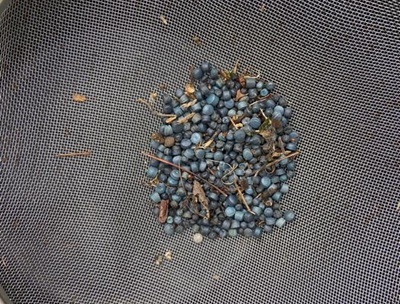
Bio-beads collected near Truro, Cornwall. Credit: Beach Guardian
A new study from researchers at the University of Exeter shows that microplastics in the natural environment are colonized by pathogenic and antimicrobial resistant bacteria. The study team calls for urgent action for waste management and strongly recommends wearing gloves when taking part in beach cleans.
Microplastics are plastic particles less than 5 mm in size and are extremely widespread pollutants. It is estimated that over 125 trillion particles have accumulated in the ocean (surface to seabed) and they have also been detected in soils, rivers, lakes, animals and the human body.
An emerging concern associated with microplastics are the microbial communities that rapidly make their home on the particle surface, forming complex biofilms known as the “plastisphere.” These communities may often include pathogenic or antibiotic-resistant bacteria.
Lab studies have shown that some commonly discarded plastic materials serve as a platform for the selective growth of bacterial communities responsible for AMR and diseases in both humans and animals. While previous work explored this in the environment, several questions and issues remained unanswered, which this new study aimed to address.
The team, led by Emily Stevenson, developed a novel structure that allows five different substrates—bio-beads, nurdles, polystyrene, wood and glass—to be secured along a waterway that was expected to decrease in anthropogenic pollution downstream.
After two months in the water, bacterial biofilms growing on each substrate were analyzed using metagenomics.
The findings showed:
- Pathogens and AMR bacteria were found on all substrates, across all sample sites.
- Polystyrene and nurdles may pose a greater AMR risk than other substrates, potentially due to their ability to adsorb antibiotics and promote biofilm formation that facilitates transfer of antimicrobial resistance genes (ARGs).
- Over 100 unique ARGs sequences were identified in microplastic biofilms, which is more than on natural (wood) or inert (glass) substrates.
- Environmental bio-beads can support bacteria that carry resistance genes to key antibiotics, like aminoglycosides, macrolides and tetracyclines.
- Unexpectedly, some bacterial pathogens increased in prevalence moving downstream, when associated with microplastic biofilms.
- Environmental location played a significant role in microbial community composition and AMR gene prevalence.
- There are potential biosecurity risks posed by microplastics, particularly in areas near aquaculture facilities, where filter-feeding organisms may ingest colonized particles containing pathogens and ARGs.
“By tracking a source-to-sea pathway influenced by hospital and domestic wastewater discharges, our study shows how antimicrobial-resistant pathogens colonized all substrates,” said Pennie Lindeque, co-author and head of group for marine ecology and society at Plymouth Marine Laboratory. “Protected within their biofilms, each microplastic particle effectively becomes a tiny vehicle capable of transporting potential pathogens from sewage works to beaches, swimming areas and shellfish-growing sites.”
Stevenson, Lindeque and the rest of the team emphasize the need for further research into how microplastics interact with co-occurring pollutants, and for improved waste-management practices to reduce the spread of antibiotic-resistant bacteria and pathogenic organisms in the environment.
“Our research shows that microplastics aren’t just an environmental issue—they may also play a role in the dissemination of antimicrobial resistance,” said Aimee Murray, co-author and senior lecturer of microbiology at the University of Exeter. “This is why we need integrated, cross-sectoral strategies that tackle microplastic pollution and safeguard both the environment and human health.”
Information courtesy of the University of Exeter