Two new, unrelated studies are shedding light on dangerous viruses and their spillover potential. Both point to proteins as critical culprits in the infection and spreading process.
SARS-CoV-2
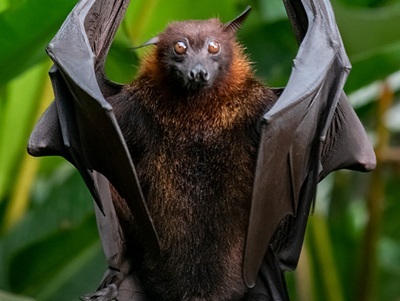
Most pandemics start when a pathogen spreads from animals to humans. In the case of COVID-19, SARS-CoV-2 spilled over from bats. Now, researchers report it was a single amino change that alters how a coronavirus protein interacts with human and bat immune systems that enabled the virus to make the jump.
In a study published in Cell Host & Microbe, researchers from the University of California San Francisco analyzed SARS-CoV-2 and a related coronavirus called RaTG13, which only infects bats. They compared how each virus interacts with immune proteins in bat and human lung cells. The experiments relied on the first laboratory-grown lung cell line from the greater horseshoe bat.
A viral protein called OrfB9 emerged as a key factor. The SARS-CoV-2 and RaTG13 versions of OrfB9 differ by one amino acid out of roughly 100. In human cells, the SARS-CoV-2 version disabled an immune alarm system, allowing the virus to multiply. In bat cells, the RaTG13 version activated an immune protein that helped suppress the virus.
“The difference between a virus that stays in bats and one that spills over into humans and causes catastrophic disease can come down to remarkably small genetic changes," said senior author of the study Nevan Krogan, director of the UCSF Quantitative Biosciences Institute. “By mapping these interactions at the protein level—across two viruses and two species—we can read the molecular signatures that predict spillover risk. It's the kind of early warning system the world needs.”
H5N1
Highly pathogenic H5N1 avian influenza A viruses are associated with wild birds and poultry, but since 2021 a group of these viruses of clade 2.3.4.4b have circulated globally in mammals and were first reported in U.S. dairy cattle in March 2024.
To date, 1,053 outbreaks of the originally detected virus genotype (B3.13) have been confirmed in dairy herds in 17 states, which have been brought under control through a national milk testing strategy that halted movement of herds producing milk in which the virus was detected. Current federal data suggests small numbers of infections in cows are confirmed in Idaho, Utah and Texas.
Now, researchers at Ohio State University report that just 10 viral particles of the H5N1 bird flu caused those outbreaks in cattle.
Researchers at the university have been following the disease since its emergence on dairy farms, even reporting earlier this year on detection of the virus in retail milk supplies.
“Pasteurization is inactivating it. But once a cow’s infected, they produce high-viral-titer milk for a week-plus,” said senior author Andrew Bowman, professor of veterinary preventive medicine at The Ohio State University.
Those high virus titers in milk were among the results of the current work, which involved testing the effects of varied levels of viral particle inoculations into individual cow teats, where mammary glands are located.
Results showed that the smallest dose of 10 particles resulted in infection. However, fewer clinical signs were seen with the 10 particles compared with higher doses.
Still, given that low threshold, the researchers then tried to identify potential disease transmission routes. However, multiple experiments showed no transfer through:
- milk machinery
- feeding of calves with high-titer milk
- or between birds and cattle through shared indoor air.
The team is continuing to pursue more answers, but for now the transmission mystery endures, meaning researchers can’t yet provide evidence-based recommendations to stop the spread.
“There is also still the bigger question of spillover from wild birds into cows. In waterfowl, it’s a pathogen replicating in their gut. How in the world does it go from a duck’s intestine into a cow’s mammary gland? That’s a head scratcher,” said Bowman.