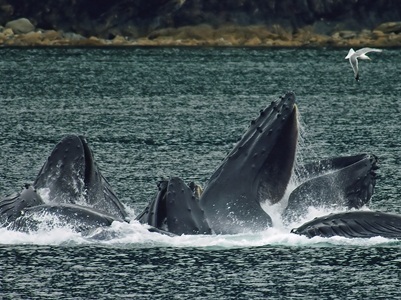
For the first time, scientists have used drones to collect samples from the exhaled breath of whales. Subsequent pathogen screening revealed a potentially deadly whale virus, known as cetacean morbillivirus, circulating above the Arctic Circle.
“Drone blow sampling is a game-changer. It allows us to monitor pathogens in live whales without stress or harm, providing critical insights into diseases in rapidly changing Arctic ecosystems,” said study co-author Terry Dawson, professor of geography at King’s College London.
For the study, published in BMC Veterinary Research, researchers deployed consumer drones equipped with sterile petri dishes to hover over whale blowholes and capture respiratory droplets. Between 2016 and 2025, they sampled humpback, sperm, and fin whales across the Northeast Atlantic, including northern Norway, Iceland, and Cape Verde.
The researchers found cetacean morbillivirus (of a strain first identified in dolphins) in humpback whale groups in northern Norway, a sperm whale showing poor health, and a stranded pilot whale.
Cetacean morbillivirus is a highly pathogenic virus infecting whales, dolphins and porpoises. It causes severe respiratory, neurological and immune damage, and has triggered multiple mass mortality events in cetacean populations since its discovery in 1987. The findings raise concerns about potential outbreak risks during dense winter-feeding aggregations, where whales, seabirds and humans interact closely.
Herpesviruses were also found in humpback whales across Norway, Iceland and Cape Verde, but there was no detection of avian influenza virus or the bacteria Brucella, which have also been linked to numerous recent mass strandings.
The research highlights the importance of continued surveillance, as pathogens like morbillivirus can cause severe disease and interact with other stressors.
Data from King’s College London