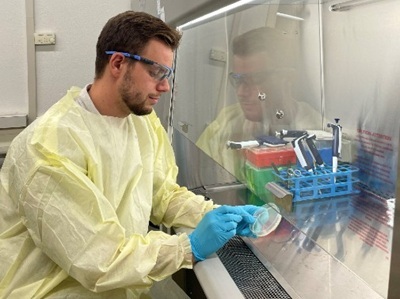
Lead author of the study, Angelo Frei, from the Department of Chemistry at the University of York. Credit: University of York
Traditionally, discovering a new drug is a slow, laborious process. Ina new study, researchers at the University of York used robotics and the Nobel prize-winning technique of click chemistry to speed the process.
For the study, published in Nature Communications, the team used an automated platform to combine almost 200 different ligands with five different metals. The result was the synthesis of over 700 new metal complexes in just under a week—a task that would typically take months of manual labor.
Following synthesis, the team screened the 700 compounds for antibacterial activity and toxicity against healthy human cells. The results identified six potential new lead compounds.
One compound in particular, a complex based on the metal iridium, stood out. It demonstrated high effectiveness against bacteria, including strains similar to MRSA, while displaying low toxicity to human cells. This suggests it has a high “therapeutic index” and is a strong candidate for further drug development.
Historically, there has been a misconception that metal-based drugs are inherently toxic. However, data from the Community for Open Antimicrobial Drug Discovery (CO-ADD) suggests that metal complexes actually have a higher “hit rate” for being antibacterial without being toxic compared with standard organic molecules.
The University of York team said they hope this new methodology will encourage the wider scientific community and pharmaceutical companies to revisit metal complexes. The team is now working to understand exactly how their new iridium compound attacks bacteria and is expanding their robotic platform to test other metals.
Data from University of York