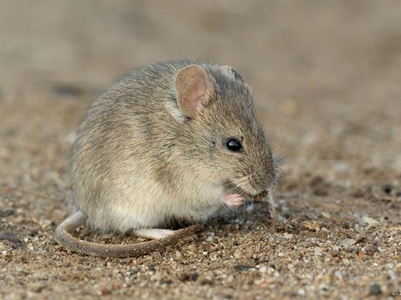
A drylands vesper mouse in Argentina is among the rodent species studied in a UC Davis study that found rodent-borne viruses in South America are expected to increase and expand as temperatures rise and rodent habitats shift with climate change. Credit: ignacio_hernandez, ArgentiNat
A new study has concluded that Climate change is likely to drive rodent-borne arenaviruses into parts of South America that have never before faced these diseases—putting new communities of people at risk.
The model developed for the study incorporates multiple factors to account for complex relationships among climate, land use, rodent ecology and human exposure that traditional models may miss. This approach raised red flags about outbreak risk for arenaviruses and other diseases in the next 20 to 40 years.
Old and new viruses and models
Arenaviruses can cause severe hemorrhagic fevers with high hospitalization rates and fatality rates ranging from about 5% to 30%. South American New World arenaviruses include Guanarito virus in Venezuela and Colombia, Machupo virus in Bolivia and Paraguay, and Junin virus in Argentina. Despite having caused multiple outbreaks in humans, they are relatively understudied compared with Old World arenaviruses, such as Lassa fever in Africa.
To delve deeper, researchers at UC Davis built an interactive, open-source platform called AtlasArena that examines how climate change is reshaping the risk of zoonotic spillover for arenaviruses and other hard-to-track viruses. They integrated climate projections, habitat suitability for six rat and mouse species linked to the viruses, human population density, and transmission risk into machine learning models.
Where to look next
According to the results, published in npj Viruses, Guanarito virus, which is found in central Venezuela, is expected to spread to parts of Colombia, the borders of Suriname and northern parts of Brazil. Meanwhile, Machupo virus is expected to move from the plains and flatlands of Bolivia to the Andes foothills and mountain regions. Junin virus is expected to move from the grassland regions to other parts of Argentina, reducing risk in some regions while expanding risk to other areas. In all cases, populations with little or no prior exposure would be encountering these viruses for the first time, increasing their vulnerability to infection and severe disease.
Ultimately, the student concludes the increased risk of spillover is driven by changes in temperature, precipitation and land use, such as expanding agricultural and urban areas within rodent reservoir habitats.
“Our study connects the dots between changing climatic conditions and land use, shifting rodent populations and human infection risk, making it possible to see where the next generation of zoonotic arenaviral outbreaks could emerge,” said senior author Pranav Pandit, an assistant professor of veterinary epidemiology at the UC Davis Weill School of Veterinary Medicine.
Pandit and team say the results underscore an urgent need for coordinated climate-adaptive public health policies and transboundary collaboration among countries at risk.
“The first thing a study like this can inform is where we expect the risk to increase,” said lead author Pranav Kulkarni, a postdoctoral scholar in the UC Davis Weill School of Veterinary Medicine. “Then we can look at why it is happening in more detail, identify ways to reduce the risk, and start planning for the long term and ways to reduce the spread of disease.”