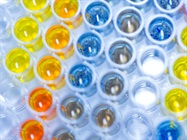
Microplate readers read biological, chemical or physical events that occur on a microtiter plate. A wide range of assays can be performed using a microplate reader including ELISAs, protein cell growth assays, nucleic acid and protein quantification, enzyme activity measurement, immunoassays, and screening of drug compounds and targets, among others. This makes these readers a staple in research labs specializing in drug discovery, bioassay validation, manufacturing, etc...
Considerations for purchasing a microplate reader
The first thing to consider when purchasing a microplate reader is the detection method. Microplates typically measure absorbance, fluorescence intensity, or luminescence, but models that measure time-resolved fluorescence and fluorescence polarization are also available for purchase. The type of detection to use will depend on the application. ELISAs and protein assays, for example, require absorbance to be measured while luciferase-based gene expression assays will require luminescence to be measured.
Other things to consider include plate format – 96-well and 384-well plates are the norm but higher and lower capacity plate sizes are also available, speed and throughput needed, type of software, and whether or not multiple plates or wells can be read simultaneously.
Find, compare, and request a quote for microplate readers across leading suppliers at Labcompare; including access to product citations, related published figures, and first-hand reviews from our scientific community.
Get Quote for All
Select up to 5 products from below to compare or request more information.
Sponsored Products
Agilent Technologies
- Inquire
- Inquire
- Inquire
- 6- to 1536-well plates, 35 and 60 mm cell culture dishes, T25 flasks, slides, hemocytometers, chamber slides
Agilent Technologies
- Monochromator, Filters, Confocal, Widefield
- Reading Speed - 96 wells: 10 seconds; 384 wells: 20 seconds
- 300 to 700 nm
- 6- to 1536-well plates
BMG LABTECH
- High energy xenon flash lamp
Dedicated Laser for AlphaScreen® / AlphaLISA®
Filters: Excitation and emission slides for 4 filters each
LVF Monochromator™ : Excitation and Emission - Reading Times (Flying Mode): 9 seconds (96 wells), 14 seconds (384 wells), 27 seconds (1536 wells)
- 240 to 740 nm or 240 – 900 (red shifted PMT) for FI, FP, FRET, TRF, TR-FRET (filters)
240 to 740 nm for LUM (filters)
320 to 740 nm or 320 – 840 nm (red shifted PMT) for FI, FRET, TRF (monochromators)
240 to 740 nm for LUM (filters)
320 to 740 nm for LUM (monochromator)
220 to 1000 nm for ABS - 6 to 1536-well plates, LVis Plate with sixteen 2 µL microspots
BMG LABTECH
- Filter-based
- 9 sec (96 wells), 16 sec (384 wells)
- 240 to 900 nm (depending on mode)
- 6 to 1536 Well Plates
BMG LABTECH
- Filters
- Varies with number of flashes and plate size
- 220 to 1000 nm for ABS, 230 to 900 nm for FI, FP, 230 to 750 for LUM, 230 to 900 for TRF
- Up to 3456 Well Plates
BMG LABTECH
- High energy xenon flash lamp
Filters: Excitation and emission slides for 4 filters each
LVF Monochromator™ : Excitation and Emission - Reading Times (Flying Mode 1 flash): 9 sec (96), 16 sec (384)
- 240 to 740 nm for FI, FP, LUM, TRF, TR-FRET (filters)
320 to 740 nm for FI, LUM (monochromator)
340 to 740 nm (linear variable dichroic)
220 to 1000 nm for abs (spectrometer) - 6 to 384-well plates, LVis Plate with sixteen 2 µL microspots
Molecular Devices, LLC
- Spectral Fusion Illumination
- Read times: Abs 29 seconds, FL 22 seconds, Lumi 21 seconds, TRF 21 seconds, FP 38 seconds, AS 22 seconds
- 230 to 1000 nm
- 6 to 1536 wells
Thermo Fisher Scientific
- Inquire
- Fast mode: ≤ 10 seconds, Precision mode: ≤ 20 seconds
- 400 to 760 nm
- 96 and 384-well Plates
Agilent Technologies
- Inquire
- 11 seconds / 96 wells
- 340 to 750 nm
- 6 to 384-well plates
Agilent Technologies
- Monochromator system, Filter system
- 11 s / 96 wells,
22 s / 384 wells
- 200 to 700 nm
- 6- to 1536-well plates
Agilent Technologies
- Inquire
- Inquire
- Inquire
- Inquire
Agilent Technologies
- Monochromator or Filter/Dichroics-based
- 11 to 42 s (varies with wells)
- 230 to 999 nm (depending on model)
- 1 to 384 Well Plates
Agilent Technologies
- Monochromator or Filter-based
- Absorbance - 12 s (96 wells), 23 s (384 wells)
Fluorescence intensity - 24 s (96 wells), 76 s (384 wells) - 200 nm to 999 nm, in 1 nm increments (Absorbance)
320 to 700 nm (low noise PMT), 320 to 850 nm (red-shifted PMT) - 6 to 384-well plates
Agilent Technologies
- Monochromator
- Varies with mode
- 230 to 999 nm
- 1- to 1536-well plates
Agilent Technologies
- Monochromator
- Inquire
- 200 to 999 nm
- 6- to 384-well plates
Agilent Technologies
- Monochromator
- 15 to 49 s (96 Well, depending on mode)
- 200 nm to 999 nm
- 6 to 384 Well Plates
Berthold Technologies GmbH & Co. KG
- Photomultiplier, Photo diode
- 28 s for 96 well plate, 98 s for 384 well plate
- 200 to 1000 nm
- 6 to 384 well microplates, Petri dishes, µDrop™ Plate, Standard cuvettes
BMG LABTECH
- Filter-based
- 20 sec (96 wells), 55 sec (384 wells)
- 240 to 740 nm
- 6 to 384 Well Plates
BMG LABTECH
- High energy xenon flash lamp
- less than 1 sec/well
- 220 to 1000 nm
- 6 to 384 well plates, user definable
BMG LABTECH
- High energy xenon flash lamp
- varies with Test
- 220 to 1000 nm
- 6 to 1536 Well Plates
Molecular Devices, LLC
- Inquire
- White light - 96-well/ 384 well microplate: <2 min
Fluorescence - 96-well/ 384 well microplate: <8 min - Inquire
- 6, 12, 24, 96 & 384-well SBS microplates
Molecular Devices, LLC
- Inquire
- 5 seconds (in speed read mode)
- Inquire
- 96- and 384-well plates, Cuvettes
Molecular Devices, LLC
- Monochromator, tunable 1.0 nm increments
- 96 wells. . . . 15 seconds
384 wells. . . . 45 seconds - 250 to 850 nm
- 96 wells / 384 wells
Molecular Devices, LLC
- Filter-based
- Inquire
- 380 to 630 nm
- 96 or 384 Well Plates
Molecular Devices, LLC
- Monochromator
- Absorbance: 17 seconds (96) Fluorescence Intensity: 15 seconds (96) Lumi: 17 seconds (96), TRF: 15 seconds (96), FP:44 seconds (96)
- 200 - 1000 nm
- 6, 12, 24, 48, 96, 384 Well Plates
Molecular Devices, LLC
- Two high-energy xenon flash lamps
- Inquire
- 200 to 1000 nm
- 6, 12, 24, 48, 96, 384-well plates ANSI/SLAS
Molecular Devices, LLC
- Inquire
- Inquire
- Inquire
- 96 and 384 wells
Molecular Devices, LLC
- High Powered LED or Flash Lamp
- Inquire
- 230 to 1000 nm
- 6 to 1536-well
Thermo Fisher Scientific
- Lasers/APDs/PMTs
- Inquire
- 96-well or 384-well
Thermo Fisher Scientific
- Monochromator
- 6 seconds with 96-well plate
10 seconds with 384-well plate - 200 to 1000 nm with 1 nm steps
- 96- and 384-well plates
Thermo Fisher Scientific
- Filter-based
- 7 sec (fast mode, 96-well plate) 13 sec (normal mode, 96-well plate) 13 sec (fast mode, 384-well plate) 34 sec (normal mode, 384-well plate
- 340-850 nm
- 96- and 384-well plates
Thermo Fisher Scientific
- Inquire
- 200 to 1000 nm (Photometry), 200 to 720 nm (Luminometry)
- 6- to 384-well plates, Thermo Scientific™ µDrop™ Plates
Thermo Fisher Scientific
- Monochromator or Filter-based
- 96 well plate in 15 s, 384 well plate in 45 s, 1536 well plate in 135 s (minimum times)
- 200 to 1000 nm
- 6 to 1536 well plates
Waters | Wyatt Technology
- Inquire
- Measurement Time: 5 to 60 seconds per well
830 nm - Inquire
- 96, 384 or 1536 well plates
Bio-Rad Laboratories
- Filter-based; 6 standard filters: 415, 450, 490, 595, 655, and 750 nm; up to 11 selectable filters
- Inquire
- 400-750 nm
- Standard 96-well microplates (flat, U-, V-bottom) and 8- or 12-well strip plates; maximum plate height: 16 mm
Bio-Rad Laboratories
- Filter-based; 6 standard filters: 415, 450, 490, 595, 655, and 750 nm; up to 11 selectable filters
- Inquire
- 400-750 nm
- Standard 96-well microplates (flat, U-, V-bottom) and 8- or 12-well strip plates; maximum plate height: 16 mm
Bio-Rad Laboratories
- Monochromator-based system for maximum optical efficiency; filter-free
- Inquire
- 200-1000 nm
- 6- to 1,536-well and custom microplates
Bio-Rad Laboratories
- Monochromator-based system for maximum optical efficiency; filter-free
- Inquire
- 200-1000 nm
- 6- to 1,536-well and custom microplates
BMG LABTECH
- High-intensity laser diode
- 16 s (96-well), 47 s (384-well)
- 635 ± 10 nm
- Up to 384-well plates (6, 12, 24, 48, 96, 384)
Select up to 5 products from above to compare or request more information.
Tags:
Please Login or Register to Create Tags
- Top Notch Performance with Wide Variety of Wavelength Ranges
Agilent Technologies
The Agilent BioTek Epoch 2 Microplate Spectrophotometer is being used in our laboratory. This instrument is very powerful and gives a top-notch performance in terms of results. We are using this ... Read Review - High-Performance Plate Reader
Agilent Technologies
The synergy multi-mode microplate reader provides simple means of detecting luminescence, fluorescence, and absorbance. This system provides flexible measurement capabilities. It handles the samples ... Read Review - Great Plate Reader
BMG LABTECH
I am very satisfied with the the CLARIOstar Plus multi-mode plate reader. It has monochromators, filters, and a spectrometer. Its unparalleled sensitivity, combined with enhanced Dynamic Range ... Read Review - Easy Double Wavelength Analysis
Agilent Technologies
Almost the entirety of this lab's work is done on this one instrument and we are happy to report that the Synergy has proved reliable and easy to use with minimal maintenance over the last four years.... Read Review - Assessing MSD and ELISA Plates Using the Multiskan SkyHigh Microplate Spectrophotometer
Thermo Scientific
I have used the Multiskan SkyHigh Microplate Spectrophotometer to read absorbance from standard ELISAs and MSD electrochemiluminescence immunoassays. This includes standard curve measurements. The ... Read Review - Affordable System for Many Common Assays
Agilent Technologies
The LX multimode reader is a machine which can be useful for running multiple assays without manual handling as it can be fast because of its automation properties. The reader is cost-effective, handy... Read Review